Why Is Making Friends as an Adult Woman So Impossibly Hard? Let's Actually Talk About It
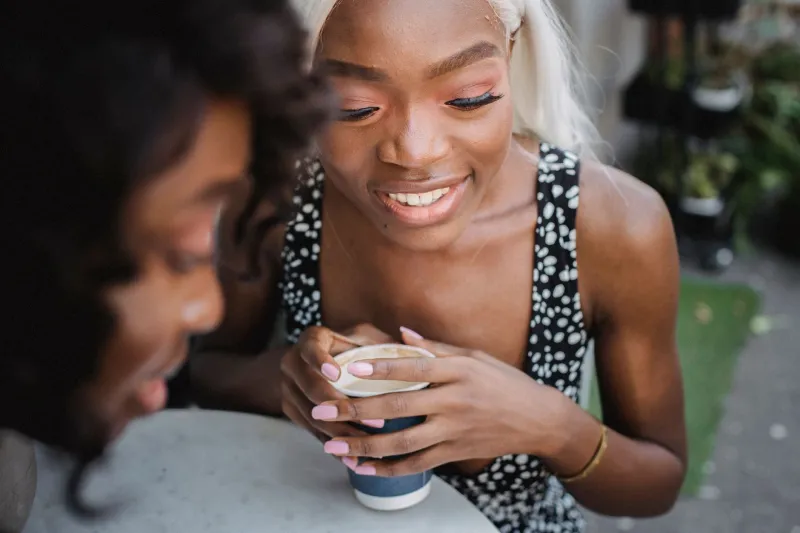
Somewhere between your mid-twenties and your late thirties, something shifts. The friendships that used to feel effortless — built on proximity, shared schedules, and the beautiful chaos of figuring out adulthood together — start requiring a level of coordination that rivals planning a small wedding. Group chats go quiet for weeks. "We should hang soon" becomes a phrase that means nothing. And slowly, quietly, you realize you can't remember the last time you had a real conversation with someone who really gets you.
This isn't a personal failure. It's a pattern. And it's affecting women across the country in ways that are only starting to get the serious attention they deserve.
The Loneliness Numbers Are Sobering
In 2023, the US Surgeon General issued an advisory calling loneliness a public health epidemic. The data is striking: 49% of Americans report having fewer close friends than they'd like, and women — despite being culturally stereotyped as more naturally social — are not exempt. In fact, research from the Survey Center on American Life found that women's social circles have shrunk dramatically over the past 30 years. The percentage of women reporting they have no close friends has nearly quadrupled since 1990.
Let that sit for a second.
We are, as a culture, lonelier than we've ever been. And women are carrying a particular version of that weight — one shaped by specific pressures that don't get discussed nearly enough.
The Culprits Are Structural, Not Personal
It's easy — and deeply unhelpful — to frame adult friendship struggles as a personal shortcoming. "You just need to make more of an effort." "Have you tried joining a club?" But the reality is that the conditions for adult female friendship have become genuinely hostile, and that's a structural problem, not a character flaw.
Geographic mobility is a big one. Americans move more than almost any other population on earth. When you relocate for a job, a relationship, or a fresh start, you don't just change your zip code — you lose the accumulated social infrastructure of years. Starting from scratch in a new city in your 30s, when everyone around you already has established friend groups and packed calendars, is hard in a way that's hard to articulate until you've lived it.
The demands of work have intensified. Full-time jobs in the US increasingly bleed into evenings and weekends. Hustle culture has made busyness a status symbol, which means saying yes to social plans can feel like admitting you're not working hard enough. For women especially — who are often held to higher performance standards and paid less for meeting them — the bandwidth for maintaining friendships can feel genuinely nonexistent.
Motherhood reshapes social life in ways no one fully prepares you for. Friendships with childless friends can drift. Mom-friend circles form quickly but sometimes feel more transactional than deep. The sheer logistical weight of parenting — particularly for mothers doing more than their share of domestic labor, which is most of them — leaves little room for the kind of unscheduled, spontaneous connection that friendships are built on.
"I love my mom friends," says Keisha, 36, a project manager and mother of two in Denver. "But sometimes I miss just talking about something other than kids. I miss being seen as a whole person. That sounds terrible to say out loud, but it's true."
It doesn't sound terrible. It sounds human.
The Expectation Trap
There's also something specific happening with women and friendship expectations that deserves its own conversation. Women are socialized to be the emotional center of their relationships — the ones who remember birthdays, initiate check-ins, hold space for everyone else's hard days. That's a beautiful thing, until it becomes an unequal burden.
Dr. Marisa Holloway, a licensed clinical psychologist in New York who specializes in women's relationships, describes what she calls "friendship fatigue" — the exhaustion that comes from consistently giving more than you receive in your social relationships. "Many of my clients aren't lacking in social connection exactly," she explains. "They're lacking in reciprocal connection. They have people they support. They don't always have people who support them back. That gap is exhausting and isolating in its own way."
The result? Women start pulling back. Not out of disinterest, but out of a very rational self-protective response to not having enough left to give.
What Actually Helps (Hint: It's Not 'Just Join a Book Club')
The advice that gets tossed around for adult friendship — join clubs, try apps, take a class — isn't wrong, exactly. But it skips over the part where making a friend and keeping a friend are two entirely different challenges, and the second one is where most of us struggle.
Here's what research and real women's experiences suggest actually moves the needle:
Lower the bar for initiation. The voice in your head that says "it's been too long, it'll be weird to reach out now" is lying to you. Research consistently shows that people are more delighted to hear from an old friend than they expect. Send the text. Make it low-stakes. "Thinking of you" is a complete message.
Invest in depth over breadth. Having twenty acquaintances feels less lonely than having two close friends but is actually more isolating. Identify the one or two people you want to go deeper with and prioritize those relationships specifically.
Be explicit about what you need. Women are often socialized to hint rather than ask directly. If you need a friend who will actually show up, say so. Friendships built on honest communication about needs tend to be far more durable.
Treat friendship maintenance like a recurring calendar event. This sounds unromantic, but it works. Monthly standing dinners, biweekly walks, a weekly voice note exchange — whatever the format, removing the friction of scheduling each hangup individually makes it dramatically more likely to happen.
Find communities organized around shared values, not just shared activities. A pottery class gives you something to do together. A community organized around something you actually care about — activism, recovery, a creative practice, a faith tradition — gives you something to be together. The latter builds faster and deeper.
You're Not Broken. The System Is Just Hard.
If you've been quietly grieving the friendships you used to have, or feeling embarrassed that making new ones feels so impossibly difficult, please hear this: you are not uniquely bad at connection. You are a normal person navigating a genuinely difficult set of circumstances — a culture that undervalues rest, mobility that disrupts roots, labor demands that eat your time, and social structures that were never really designed to sustain adult female friendship in the first place.
The first step is naming it. Talking about it. Admitting that yes, this is hard, and yes, it matters, and no, you shouldn't have to white-knuckle through the loneliness alone.
We see you. And we're building this community at Chicks.xyz in part because of exactly this — because women deserve spaces where they can be real, be known, and stop performing okayness for people who aren't really paying attention anyway.
Tell us in the comments: what's been the hardest part of adult friendship for you? We're listening.