Go Ahead, Order the Pumpkin Spice Latte: A Defense of Loving What You Love Without Apology
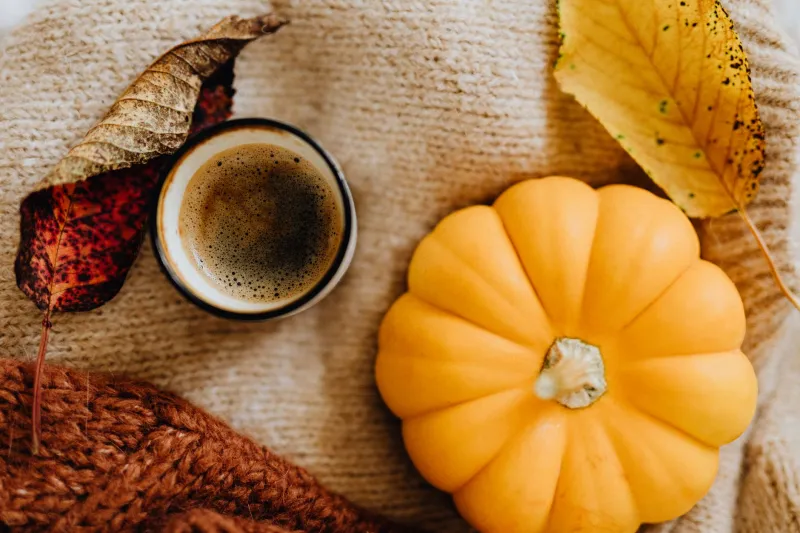
Every fall, without fail, it begins. The pumpkin spice latte returns to Starbucks menus and, right alongside it, the annual tradition of people lining up to announce how much they hate that other people like it. The memes. The eye-rolls. The "basic" jokes that have somehow survived a decade of everyone agreeing they're tired of them.
And every year, there's a quiet but real moment where women who genuinely love a warm, spiced seasonal coffee drink feel just a little bit silly for it. Like maybe they should want something more sophisticated. Something less predictable. Something that doesn't announce quite so loudly that they are, in fact, a woman who enjoys things that are widely enjoyed by women.
We're done with that.
Let's Talk About Where 'Basic' Actually Came From
The word "basic" as a cultural insult has a specific target, and it's not subtle. It describes women — almost exclusively women — who enjoy mainstream, popular, commercially successful things. Seasonal beverages. True crime podcasts. Cozy mystery novels. Reality TV. Yoga pants. Scented candles. The entire aesthetic of a Joanna Gaines kitchen.
None of these things are harmful. Most of them are actively pleasant. And yet, the label "basic" was designed to make women feel embarrassed for enjoying them — to create a hierarchy where the culturally sophisticated woman distinguishes herself by having more obscure, more ironic, or more male-coded tastes.
Here's the thing about that hierarchy: it's not about quality. It's about gender. Nobody calls a man "basic" for loving football, drinking light beer, or watching the same Marvel movie three times. Those preferences are just... preferences. Neutral. Acceptable. But when women have preferences that are shared by a lot of other women? Suddenly that becomes evidence of a kind of intellectual or cultural laziness.
That's not a coincidence. That's misogyny with a quirky font.
The Exhausting Performance of Curated Taste
The flip side of "basic" is the performance of being not-basic — and it is genuinely exhausting.
You know what this looks like. It's the compulsive need to clarify that you "only listen to underground artists." It's the slightly defensive explanation that you watch prestige TV, not that show. It's the way certain women distance themselves from Taylor Swift discourse, or from the Bachelorette, or from Hallmark Christmas movies, because being associated with things that other women love feels like a threat to how they're perceived.
And here's the darkest version of this: sometimes the loudest voices dismissing "basic" culture are other women. Women who have internalized the idea that distancing themselves from mainstream femininity makes them smarter, cooler, or more credible. It doesn't. It just means they've accepted a framework that was designed to keep women competing with each other for the approval of a culture that still doesn't fully respect either of them.
The sophisticated move isn't to reject what's popular. It's to refuse the entire game.
What You're Actually Defending When You Defend 'Basic'
Let's get specific about what we're actually talking about, because the dismissal of "basic" interests often means dismissing things that are genuinely meaningful.
True crime is one of the most-consumed podcast genres in America, with a listenership that skews heavily female. Critics love to mock this — women obsessed with murder, how morbid, how predictable. But spend five minutes in any true crime community and what you actually find is women who are deeply engaged with questions of justice, systemic failure, victim advocacy, and the ways women in particular are made vulnerable and then ignored. That's not shallow. That's serious.
Comfort TV — the rewatched sitcoms, the cozy procedurals, the reality competitions — serves a real psychological function. In a period of collective burnout and ambient anxiety, choosing entertainment that feels safe and predictable isn't laziness. It's self-regulation. It's knowing what you need and giving it to yourself. That's actually kind of healthy.
And the seasonal drink thing? Joy. It's just joy. The pumpkin spice latte is a little ritual that marks the turning of a season, that tastes like something specific and anticipated, that is consumed in community with millions of other people who also find something warm and comforting about it. There is nothing wrong with that. There is nothing to fix about that.
Shared Taste Is How Community Gets Built
Here's something the anti-basic crowd consistently misses: shared popular culture is one of the primary ways humans build community.
When millions of women are reading the same book, watching the same show, listening to the same album — that's not a symptom of a lack of individuality. That's culture doing what culture is supposed to do. It creates shared reference points. It gives people something to talk about, to bond over, to process together.
The Taylor Swift fandom is probably the most obvious recent example. What critics see as a mass of undifferentiated "Swifties" is actually an enormously rich community of women (and plenty of others) who have found genuine friendship, creative expression, and emotional resonance through shared enthusiasm. The fact that it's popular doesn't make it less real. If anything, the scale of it is the point.
When we mock women for having mainstream tastes, we're mocking the communities those tastes build. We're telling women that the joy they find in shared experience is somehow lesser than the joy found in more obscure or solitary pursuits. That's backwards.
The Only Taste That Matters Is Yours
Here's where we land: you are allowed to love whatever you love. Not ironically. Not with a defensive explanation attached. Not with a qualifier about how you also listen to jazz or whatever.
You can love the pumpkin spice latte and Dostoevsky. You can be obsessed with the Real Housewives and also have strong opinions about urban planning policy. You can rewatch Gilmore Girls for the seventh time and also read literary fiction. Humans contain multitudes; this is not a controversial statement.
The real sophistication isn't in having rare taste. It's in being secure enough in yourself that you don't need your preferences to perform your intelligence. It's in letting other women enjoy their things without needing to signal that you're above it.
So this fall, when the seasonal menus drop and the true crime podcasts release their new series and the comfort TV gets queued up — enjoy it. Enjoy it loudly, if you want. Share it with your friends. Build community around it.
And the next time someone raises an eyebrow at your order, you can simply smile. You know what you like. That's more than enough.